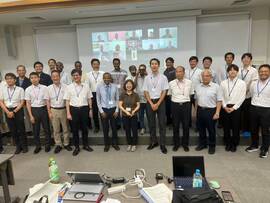
First Tottori Annual Workshop Held for the RA-SATREPS Project
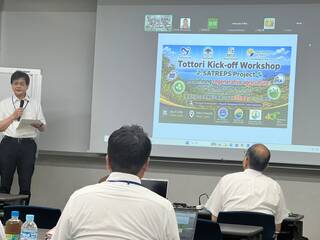
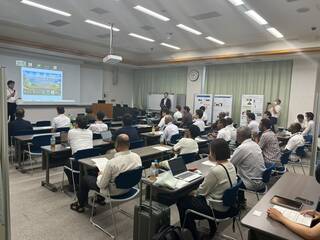
During the morning session, Japanese researchers shared the project background, objectives, implementation structure, experimental plans, and baseline survey plan. Building on the achievements and professional network developed through the Sustainable Land Management (SLM)-SATREPS Project launched in Ethiopia in 2017, the new project aims to establish a scientific foundation for an integrated regenerative agriculture management system that combines crops, agroforestry, livestock, and grazing to address the interconnected challenges of land degradation, climate change, and biodiversity loss.
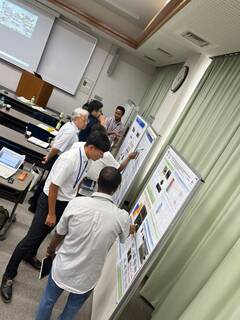
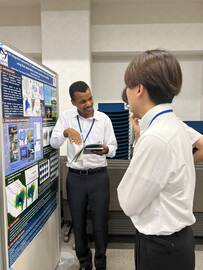
Professor Nigussie, the project research leader, and other researchers introduced planned activities and future perspectives for the project's four research components: soil and crop management, agroforestry, livestock and grazing management, and an intergrated landscape approach. These activities will mainly be implemented in the Sidama Region of southern Ethiopia. Researchers from Tottori University and collaborating institutions, including the University of Tokyo, Shimane University, Kyoto University, Okayama University, and Kagoshima University, also shared findings from research relevant to their respective components, including stress-tolerant crop production, beneficial rhizobia, livestock feed utilization and methane emissions, soil microorganisms, rangeland biodiversity, and ecosystem services. A poster session by doctoral students was held after lunch.
During the afternoon joint session, representatives from JICA, Hawassa University, the Sasakawa Africa Association, and Japanese research institutions shared experiences with regenerative agriculture in Ethiopia and Japan. Ethiopian component leaders then presented their research plans for soil and crop management, coffee- and enset-based agroforestry, forage and grazing management, and socioeconomic analysis and scaling-up.
At the conclusion of the workshop, participants reaffirmed the importance of improving soil health and long-term agricultural performance through integrated land-use approaches across different ecosystems. They also emphasized the need to advance landscape-level research supported by clear indicators and policy relevance while contributing to globally applicable methodologies and stronger socio-ecological research.